
Part 6
Two years later, if you had asked a stranger to describe my life, they probably would have called it peaceful.
I lived in Surrey with my children in a home filled with light, old books, muddy shoes, and the kind of laughter that arrives without permission. I chaired the board of a small educational foundation my parents had once supported. I painted again—badly, but enthusiastically. I slept through the night more often than not. Some evenings, after the children were asleep, I sat in the kitchen with Nick while the dog snored beside the fire and thought about absolutely nothing.
Nothing.
That was the luxury I had nearly forgotten existed.
David kept his word.
He visited regularly, contributed to the children’s school fees and travel expenses, attended parent conferences through video calls, and slowly—imperfectly—learned that fatherhood is not a title granted by blood or ego. It is the discipline of showing up.
Aiden trusted him again in careful doses. Chloe adored him without reservation, because children are generous in ways adults rarely deserve. I did not interfere with their relationship. I protected it only where necessary.
One autumn, David asked if he could take the children to New York for a week during school break.
The old version of me would have panicked.
The current version requested the itinerary, confirmed the details, spoke with the children, reviewed the legal paperwork, and said yes.
When they returned, Aiden overflowed with stories about museums and baseball, while Chloe wore a tiny Statue of Liberty crown she insisted was fashionable. David had done well. Not perfectly. But well.
That mattered.
It mattered because endings are rarely as clean as people imagine. The end of a marriage does not erase shared children, shared history, or the obligations that remain after love disappears. Real endings are quieter. More disciplined. Less theatrical. They are built through choices repeated over time.
Mine was built that way.
Not through revenge, though I had every reason to crave it.
Not through reconciliation, because some doors should remain closed.
But through clarity.
I stopped telling myself the story that if I had been prettier, softer, more patient, less tired, more glamorous, more exciting, more anything, David would have remained faithful. Betrayal says far more about the betrayer’s character than the worth of the betrayed person.
That truth changed my life.
I also stopped believing pain automatically makes people noble. It doesn’t. Pain can make people bitter, cruel, manipulative, hollow. Survival becomes strength only when you refuse to pass your damage on to your children.
That became my real work.
Years from now, Aiden and Chloe may remember the divorce differently than I do. They may remember airports and tears, a strange house slowly becoming home, awkward calls with their father, birthdays divided across continents. They may remember confusion more than details.
What I hope they remember most is this:
They were wanted.
They were protected.
They were never the reason anything broke.
On a bright morning in late May, almost three years after the day I signed the papers, I sat on a bench beside the pond while Chloe sketched ducks and Aiden kicked a football with friends. Nick walked over carrying two coffees and handed one to me.
“You look content,” he said.
“I am.”
He sat beside me. “Your father would have been proud of you.”
I looked out across the water shimmering beneath the sun. “I hope so.”
“He would have been.”
We sat quietly for a while.
Then Nick asked, “Do you ever regret not going back?”
I smiled faintly. “To New York?”
“To David.”
The answer came easily because time had purified it.
“No,” I said. “I regret staying as long as I did. But I don’t regret leaving.”
Nick nodded as though that was exactly the answer he expected.
Across the lawn, Chloe waved enthusiastically. “Mom! Look at my duck!”
I waved back.
Aiden shouted, “I scored!”
“I saw!” I called.
The breeze moved softly through the trees in a low, comforting hush. Somewhere behind me, the dog barked. Somewhere ahead of me, my children ran toward whatever lives they would someday build for themselves.
And suddenly I understood the entire story—not as a story about a cheating husband, a lying mistress, a family of seven crowded around an ultrasound, or a dramatic collapse from social grace.
It was a story about the exact moment a woman stops confusing endurance with love.
It was a story about what happens when humiliation fails to destroy her.
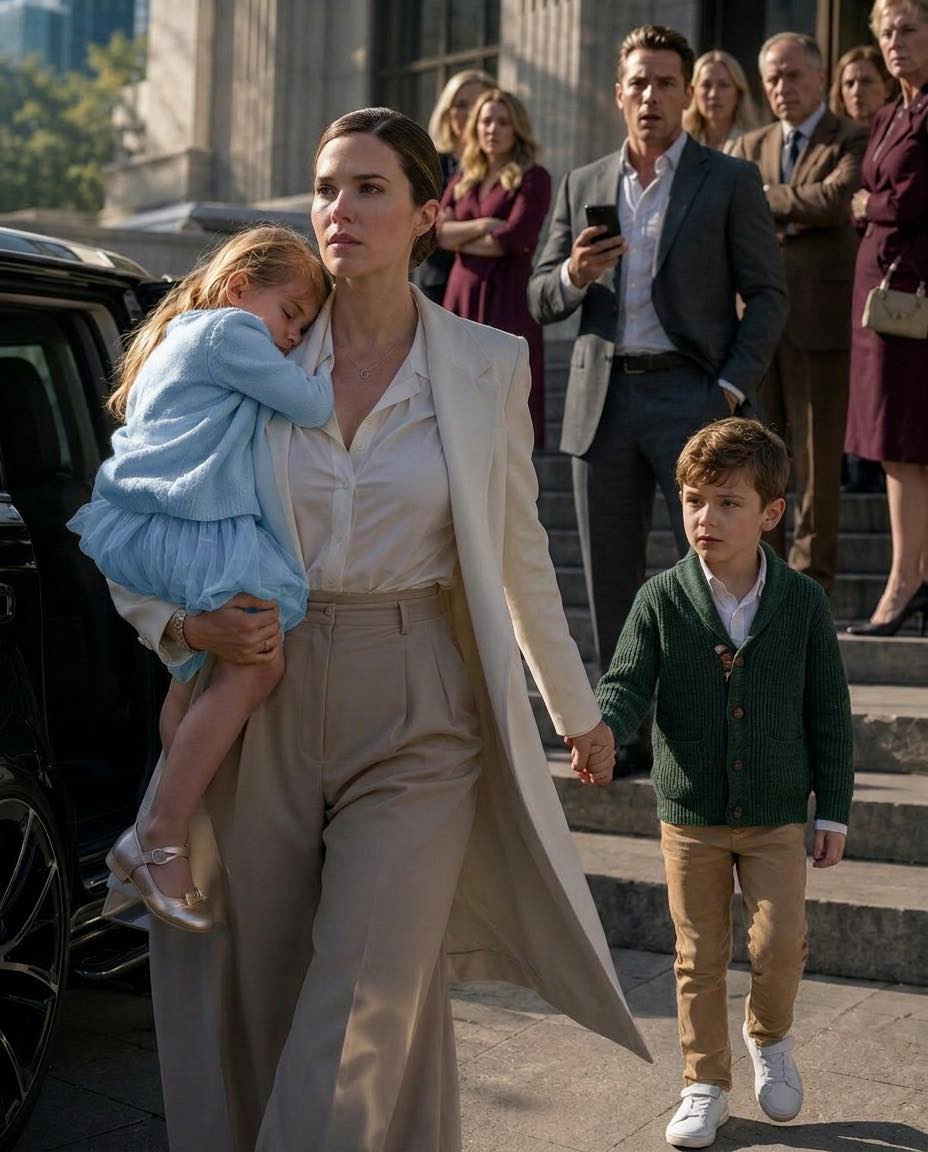
It was a story about children carried out of one life and guided carefully, bravely, into another.
David had lost more than money.
He had lost the illusion that loyalty could be demanded without being earned.
Allison had lost the fantasy that deception could create permanence.
The Harlow family had lost the convenient lie that cruelty comes without cost.
And I had lost something too.
I had lost the need for their approval.
In exchange, I gained peace.
Not the glittering kind. Not the triumphant kind people applaud.
The real kind.
The kind that arrives quietly after you tell the truth, close the door, and build a life sturdy enough that no one else’s betrayal can tear it down again.
I watched Aiden and Chloe running toward me through the sunlight, their voices overlapping, their faces bright, alive, unafraid.
I stood to meet them.
And this time, I was not walking away from my life.
I was walking into it.
The most important part is just ahead — click NEXT »»
